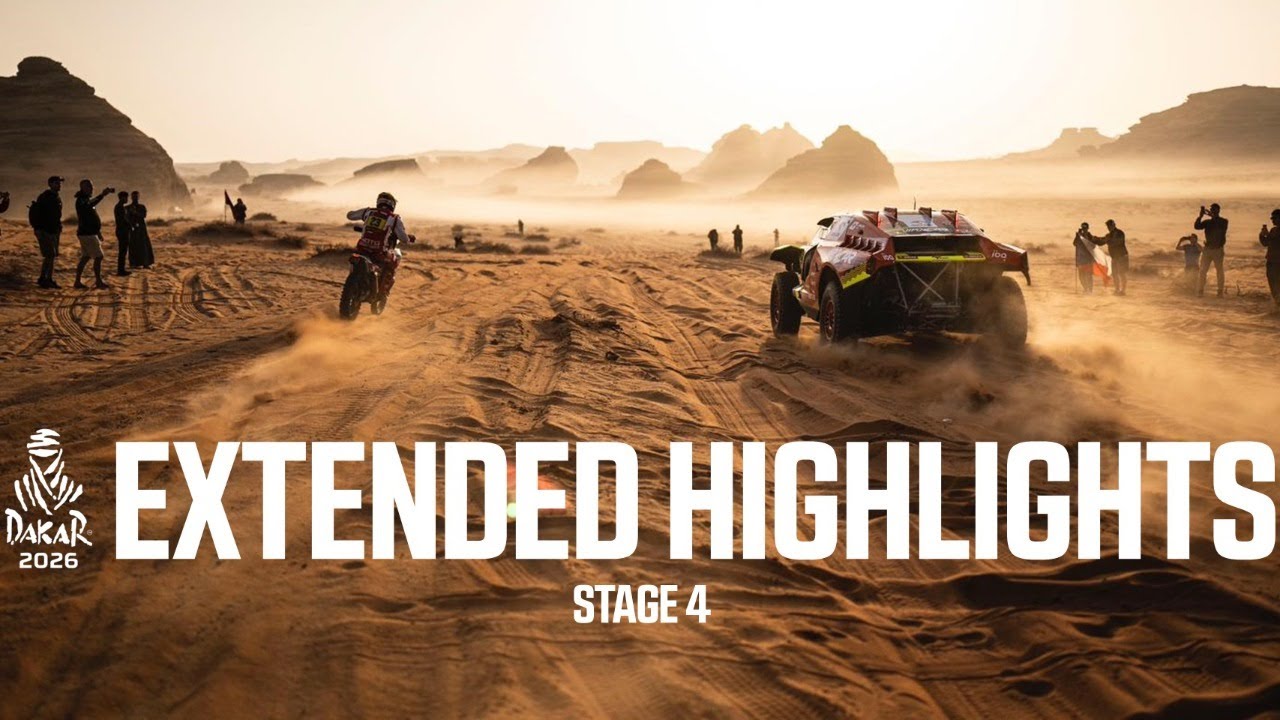
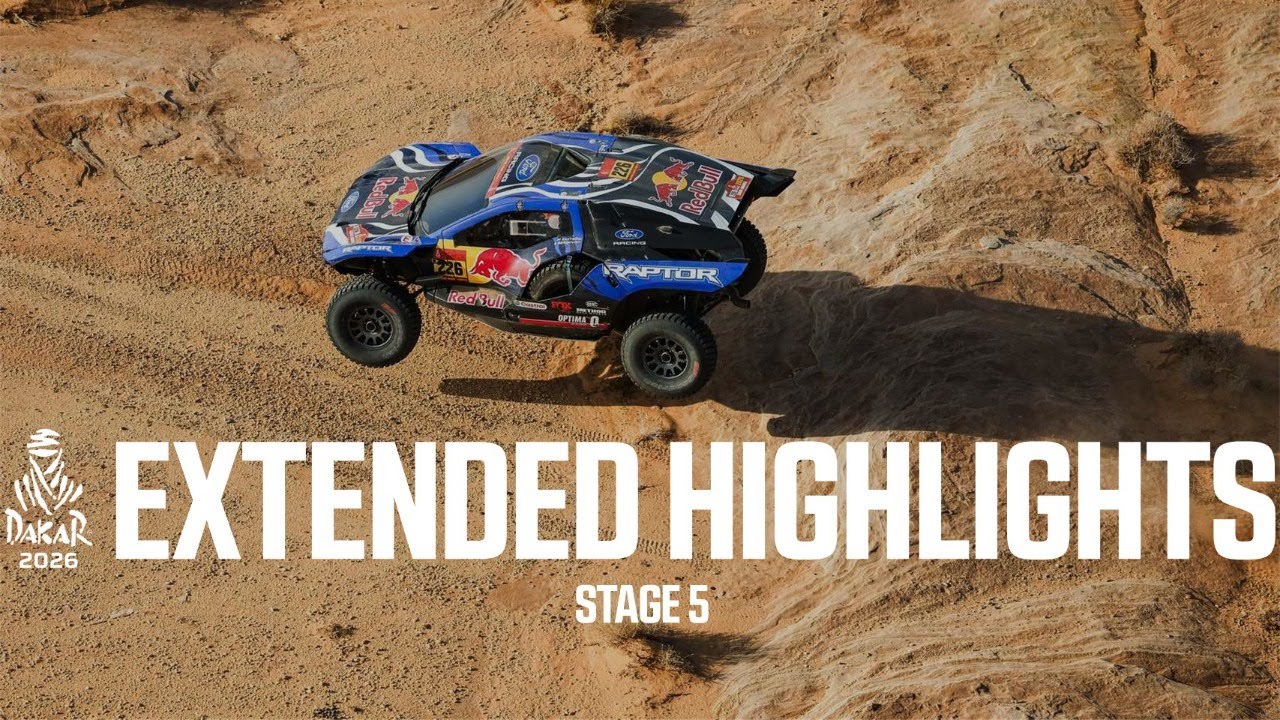
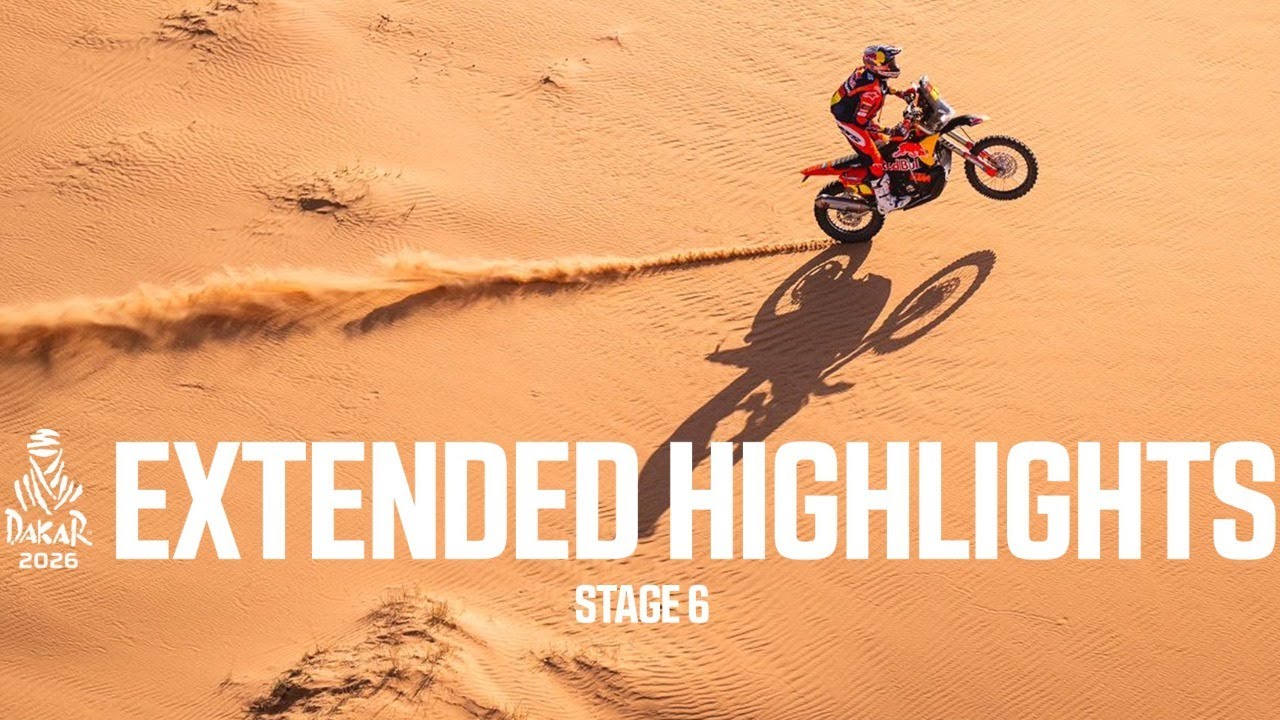
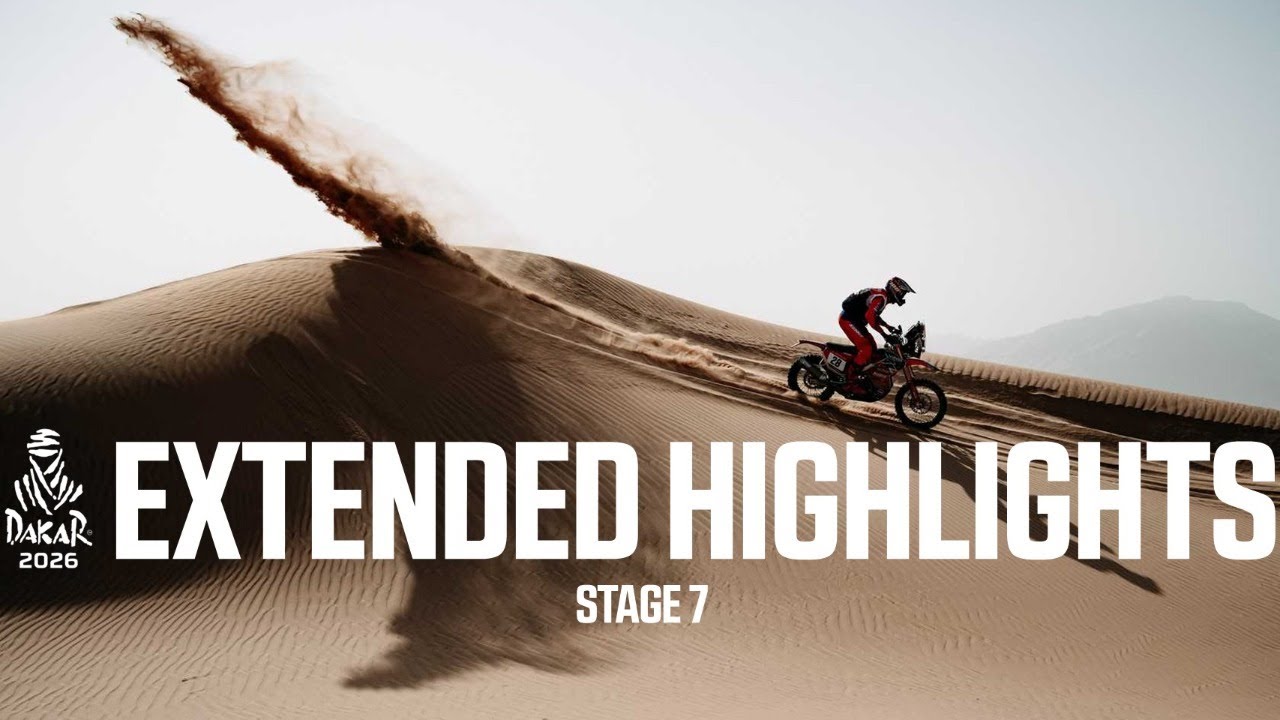
Here’s the 2026 Dakar wrap up videos - Extended Highlights, Ultimates, and Bikes.
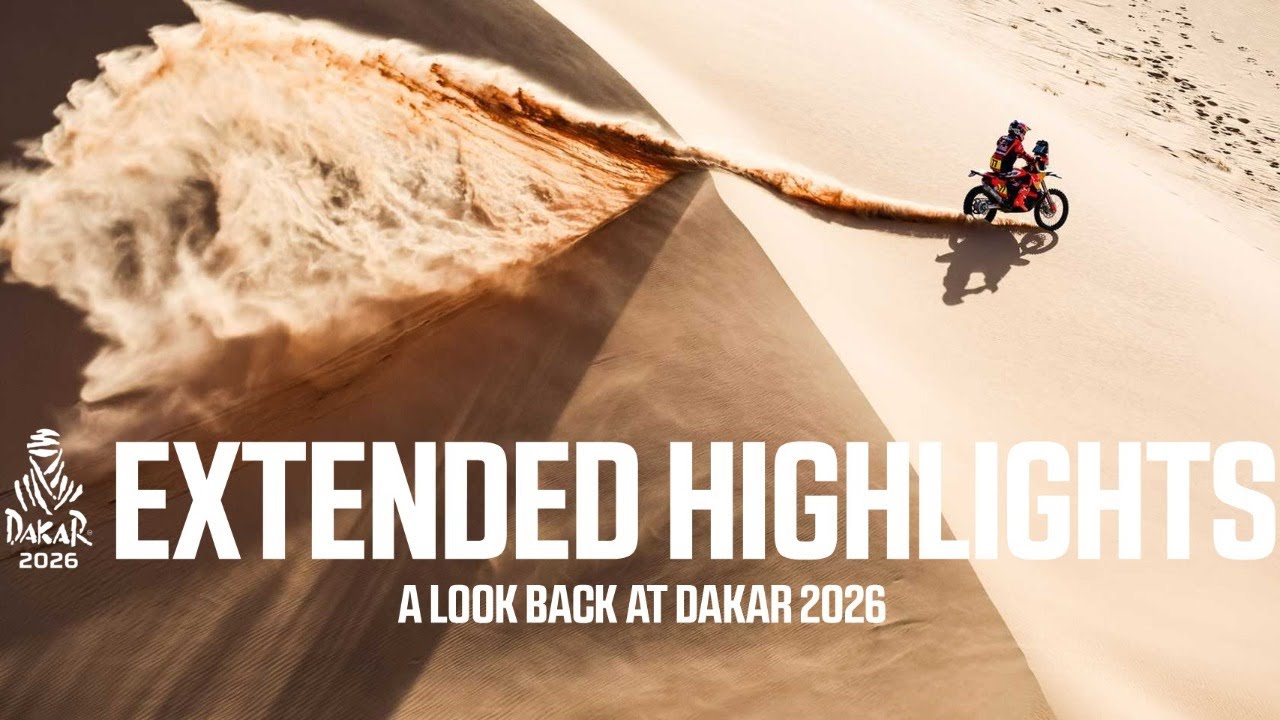
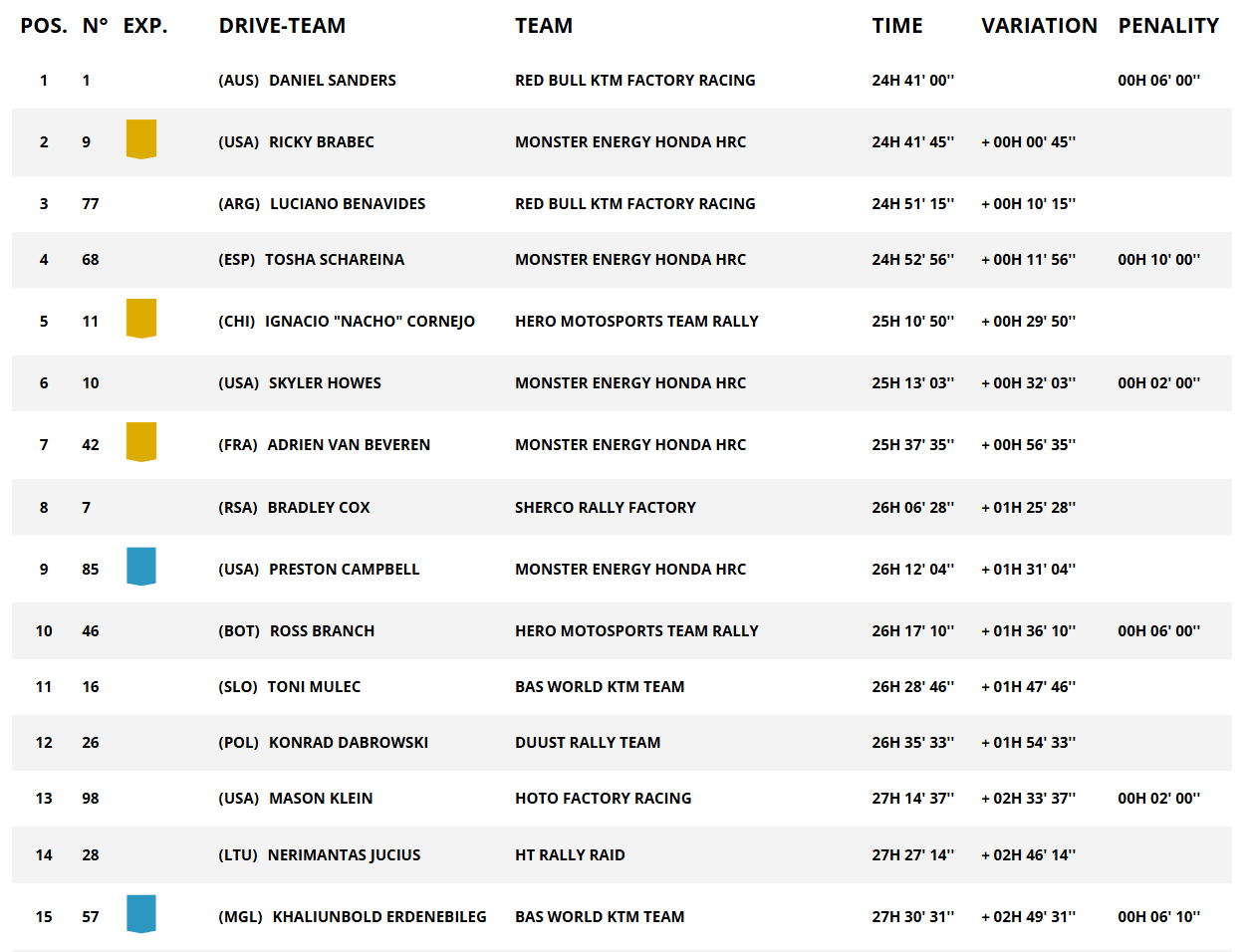
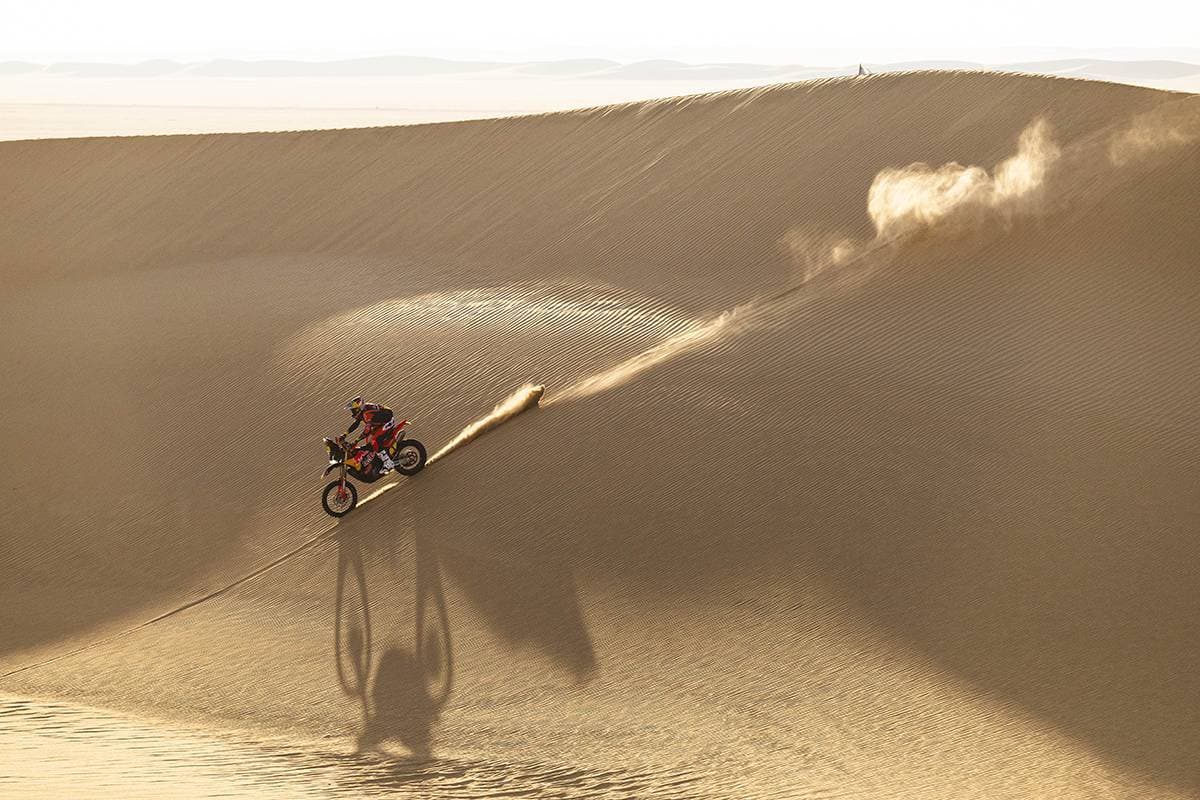
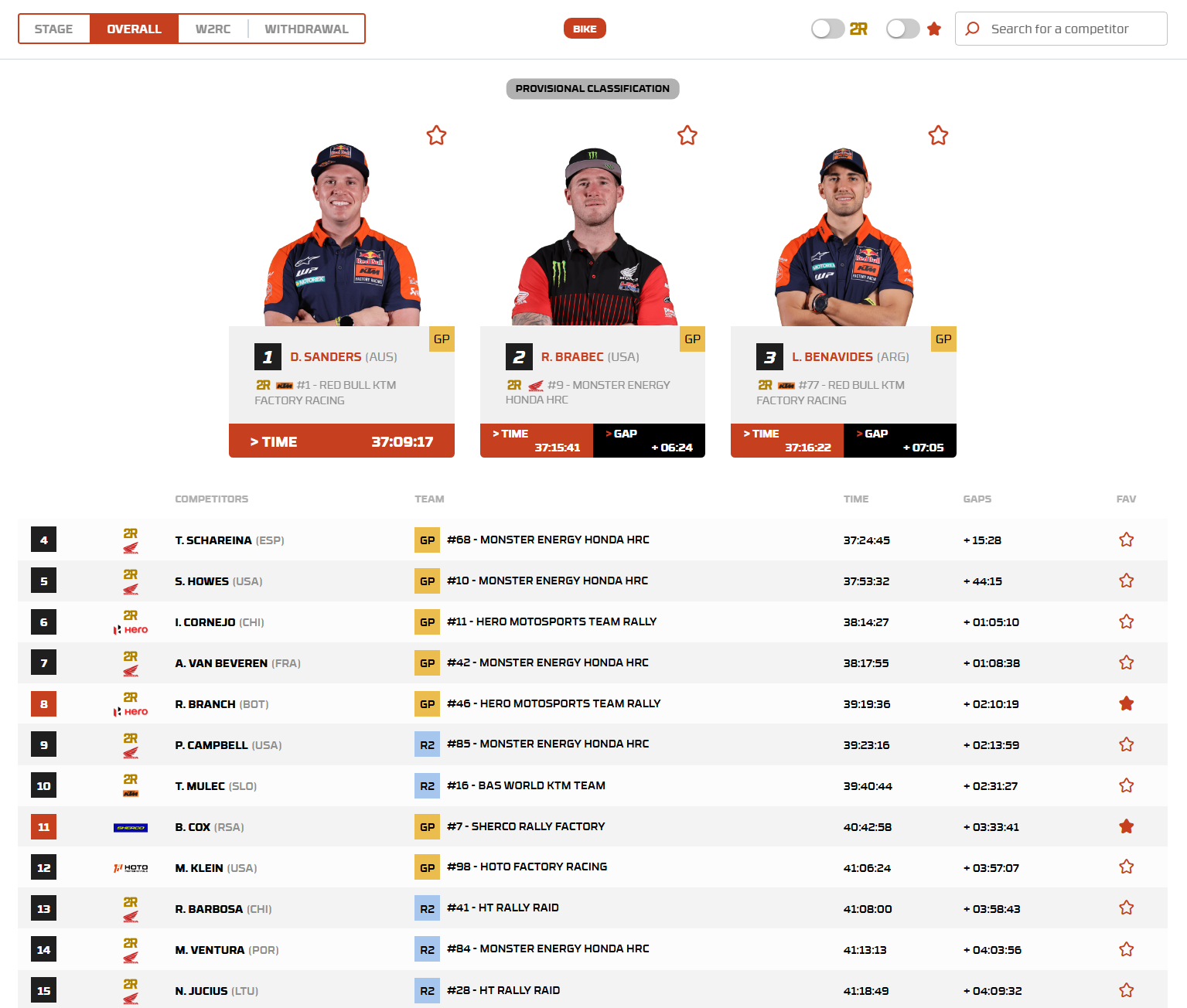
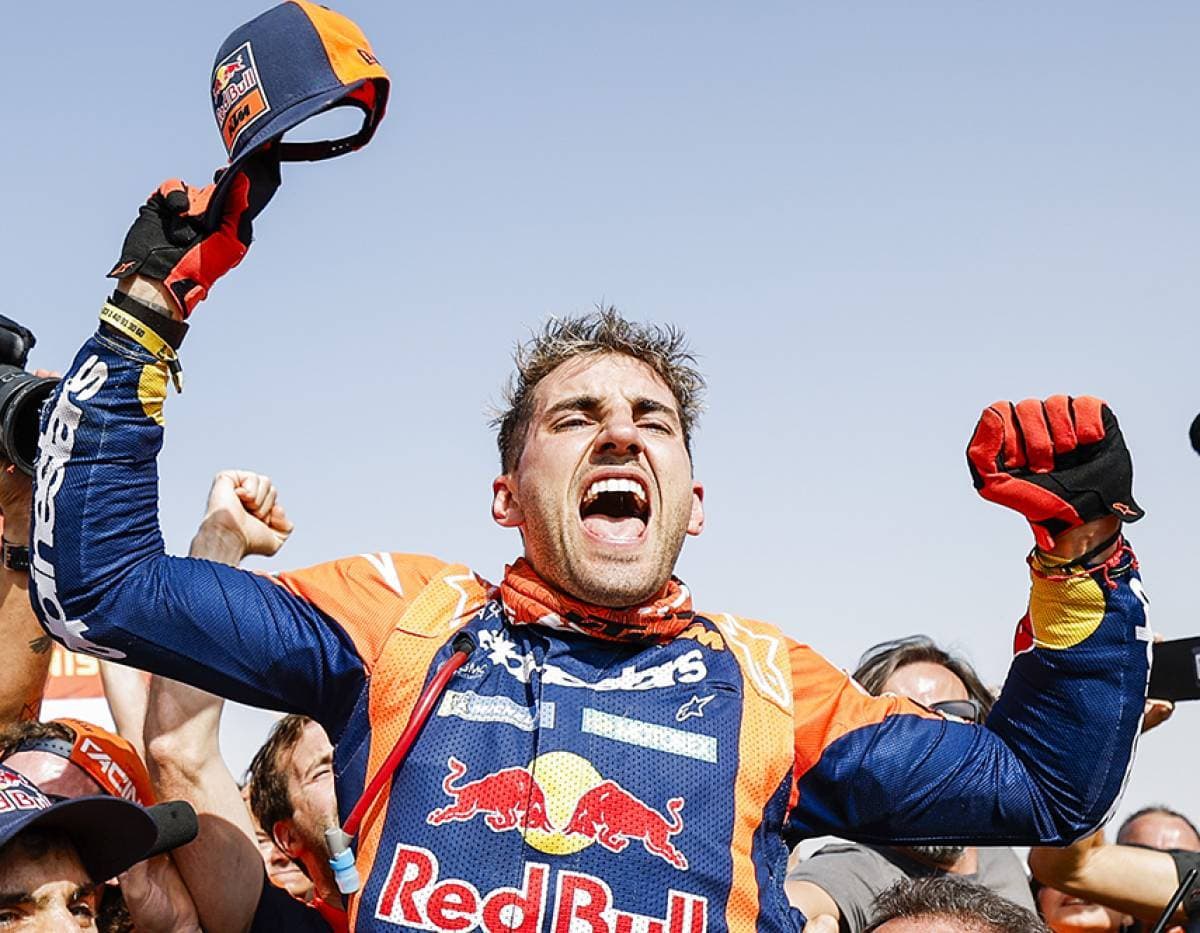
- The 2026 Dakar finale was one of those shocking moments in world sport where everything changes in a heartbeat, such as Greg LeMond beating Laurent Fignon by 8 seconds in the 1989 Tour de France or Manchester United coming back from behind to win the 1999 Champions League final in injury time. Luciano Benavides edged out Ricky Brabec by 2 seconds, the narrowest margin in the history of the rally, in the latest twist ever seen in the Dakar, a navigation error 7 km from the line. Red Bull KTM Factory Racing exploded in jubilation, while the American Monster Energy Honda HRC rider, who missed out on a three-peat, swallowed his bitter defeat with dignity. The Argentinian picked up the first rally of his career, joining his brother Kevin (a winner in 2021 and 2023) in the annals of the race.
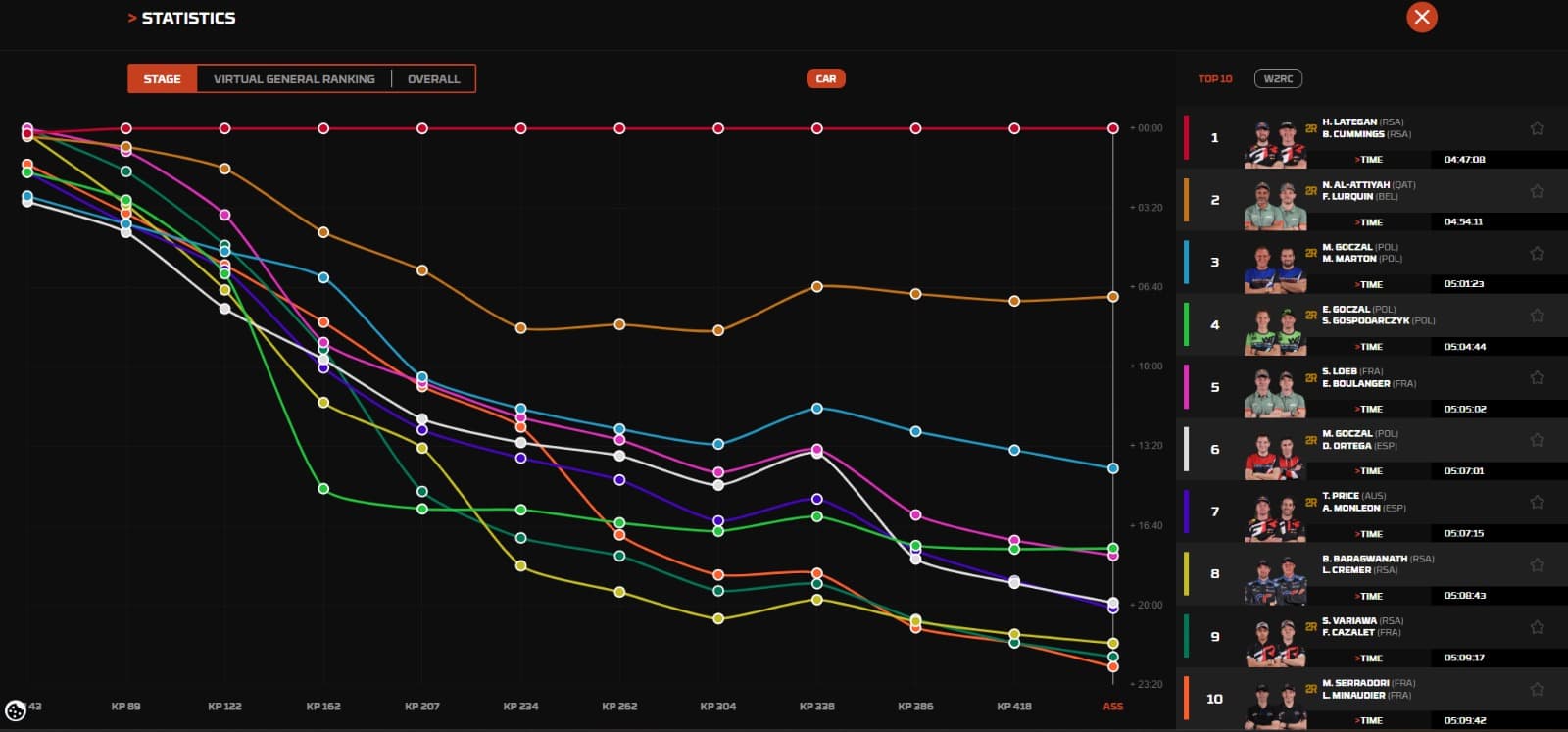
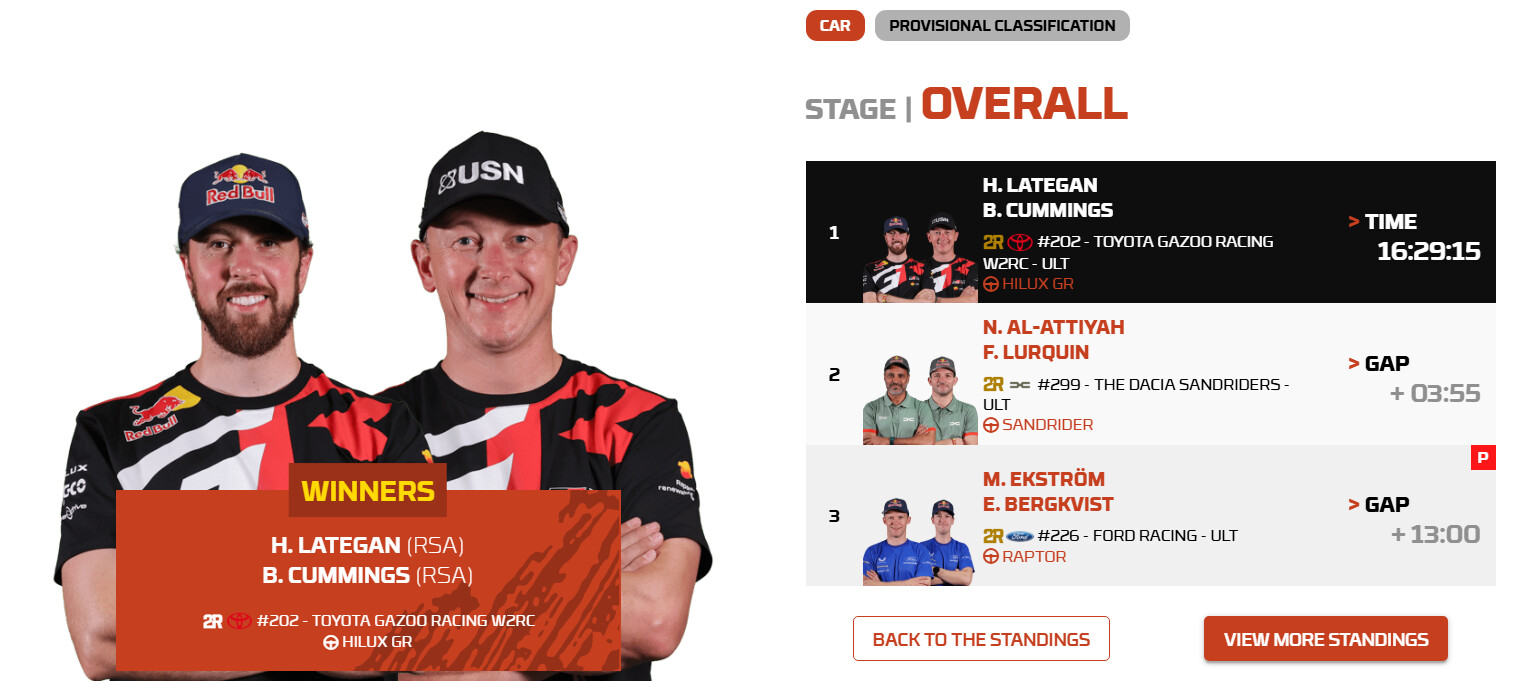
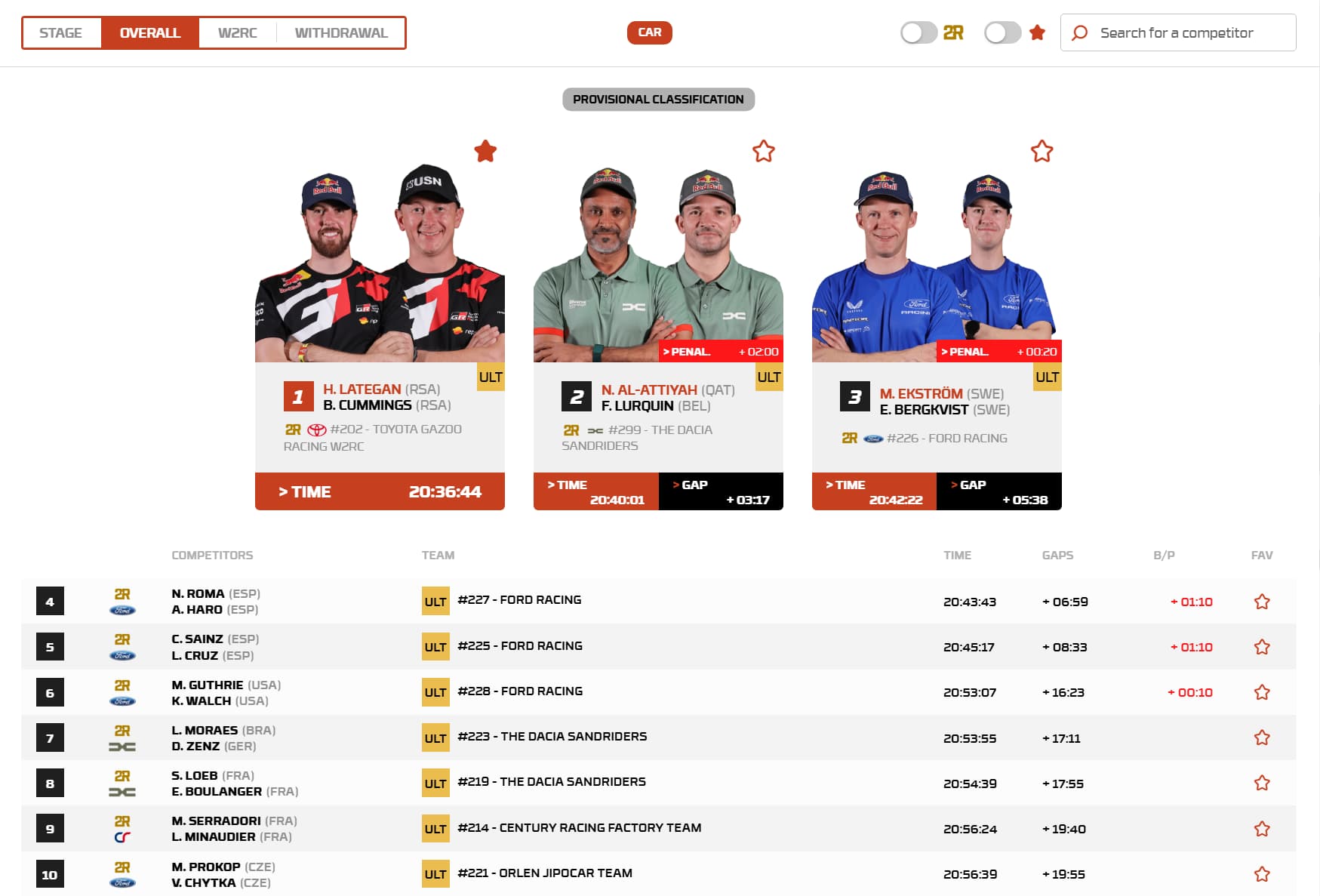
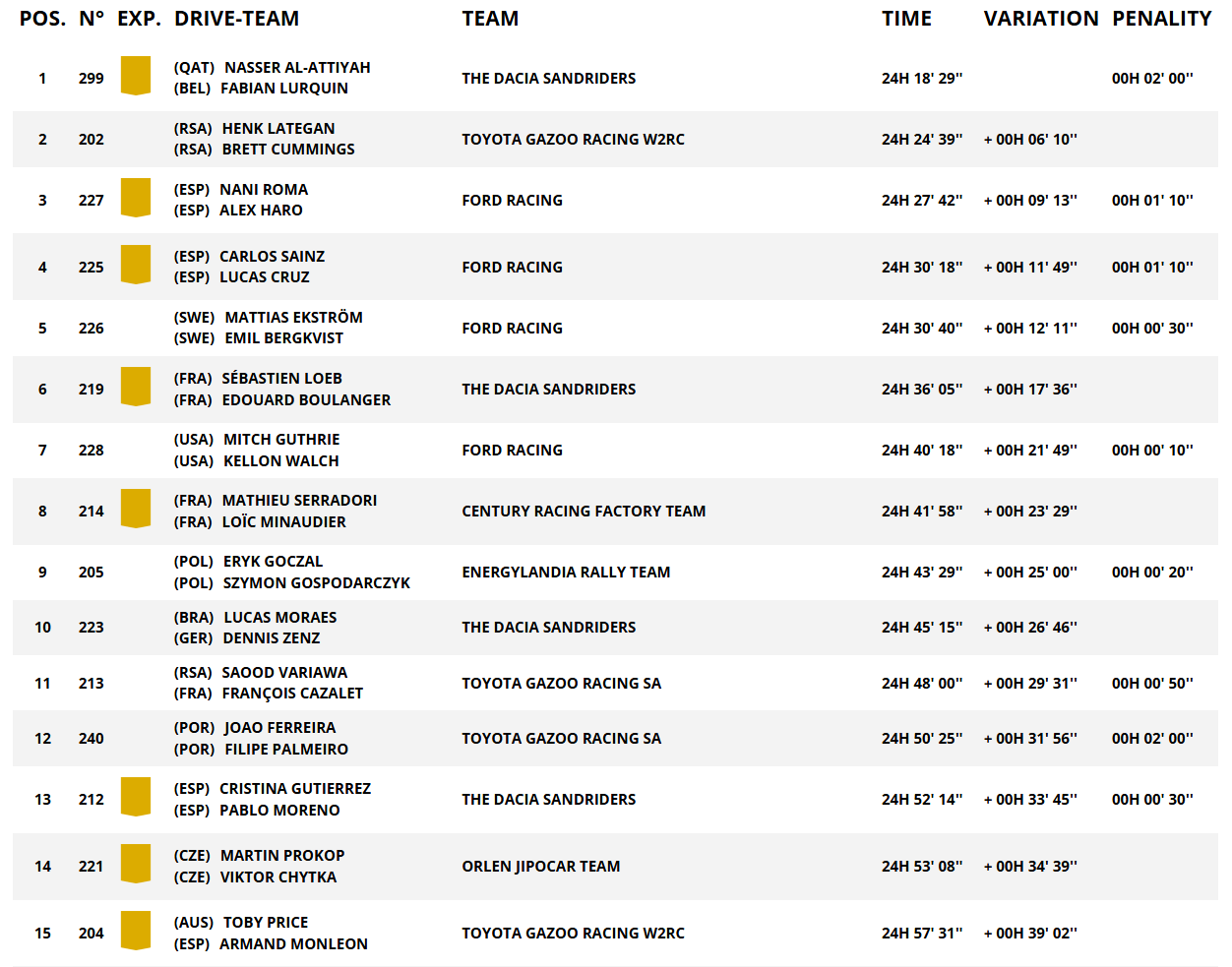
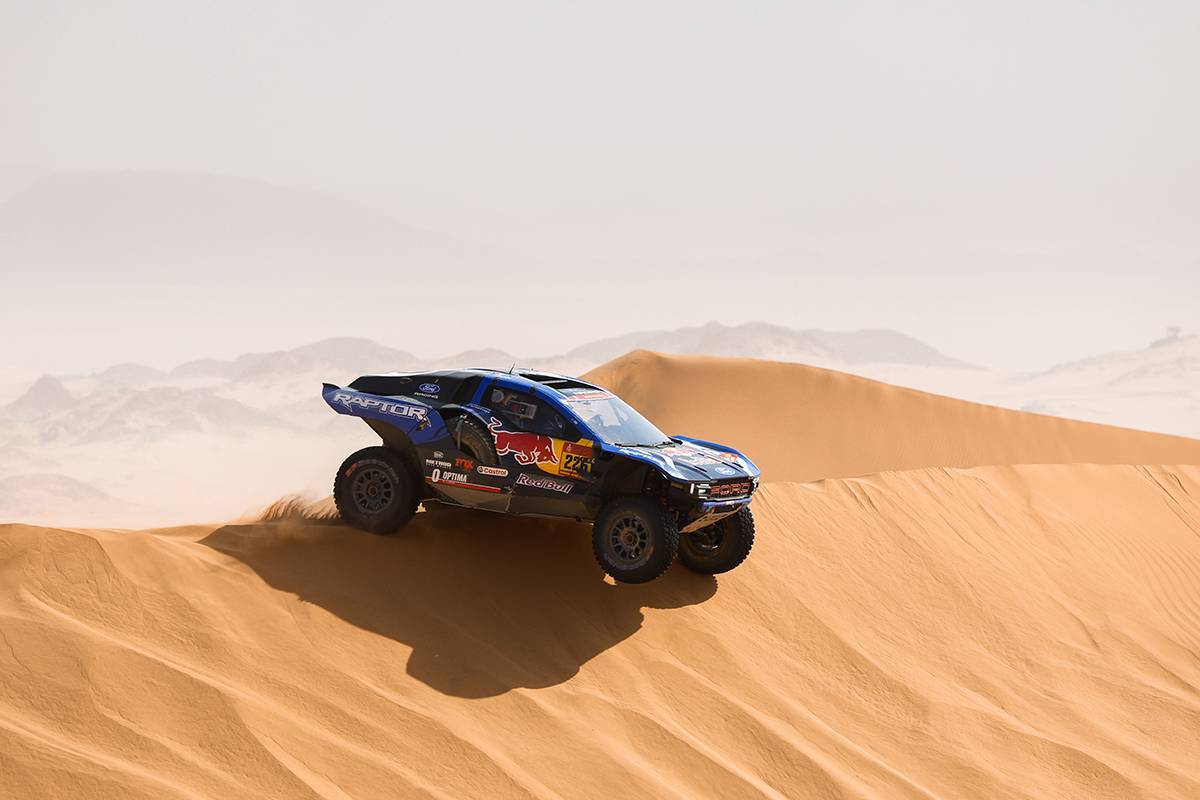
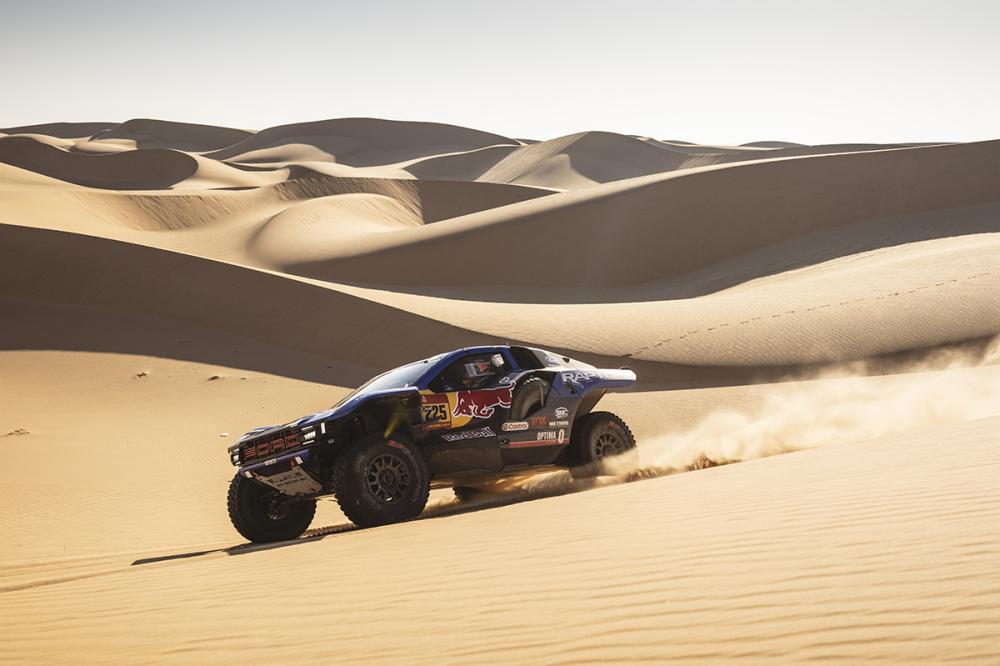
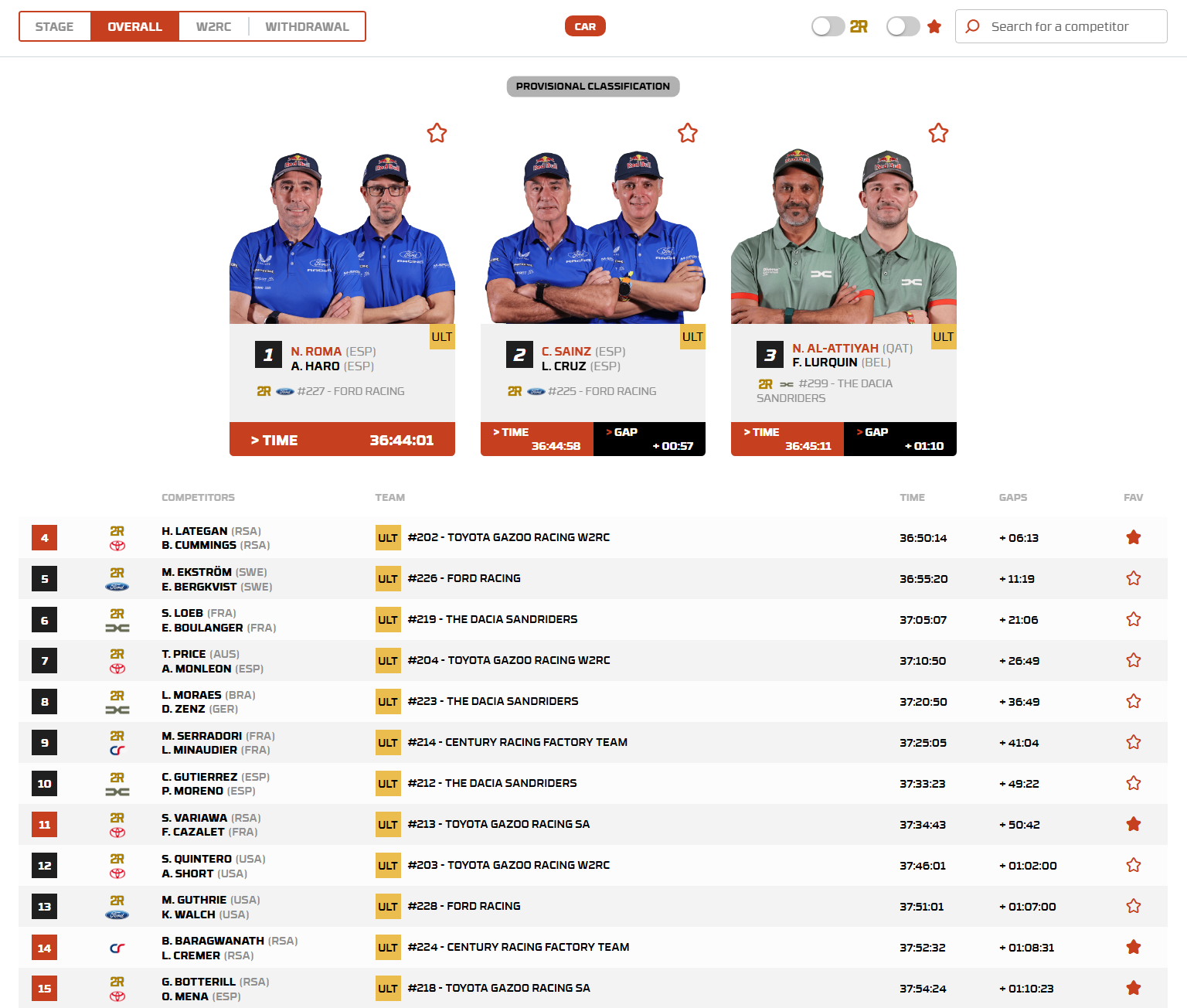
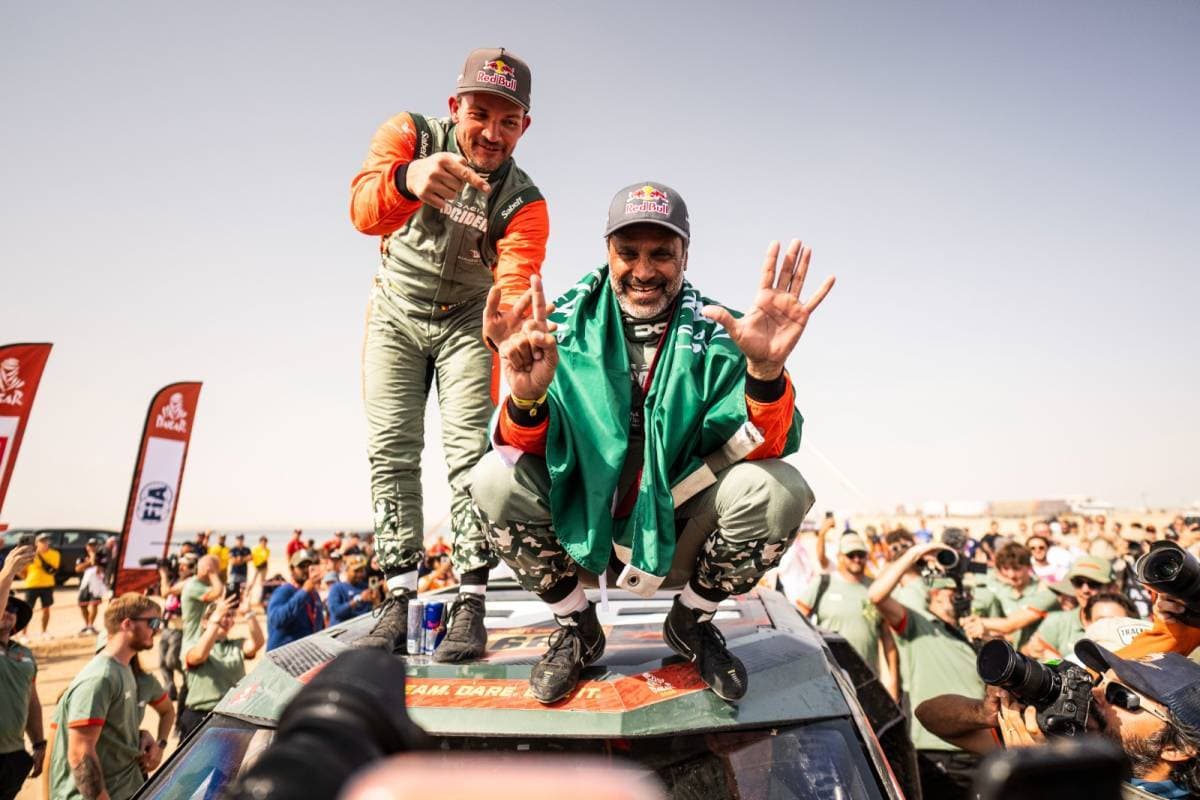
- Nasser Al Attiyah added a new line to his legend in the car category, winning the Dakar for the sixth time. He is now halfway between Ari Vatanen (four victories) and Stéphane Peterhansel (eight in cars). He also opened Dacia’s account in the rally, dispatching the Ford Raptors of Nani Roma and Mattias Ekström, with Sébastien Loeb finishing just outside the podium for the first time in his career.
- Kevin Benavides marked his brother’s triumph with a victory of his own in the Challenger stage, but the overall winner was the Spaniard Pau Navarro, who romped home with 23 minutes to spare. In SSV, the American Brock Heger and his Polaris defended his title by an hour over Kyle Chaney and his Can-Am.
- Vaidotas Zala also hit the right note in the truck race, claiming the title on his second attempt. The Lithuanian defeated the battle-hardened Ales Loprais (+20′18″) and Mitch van den Brink (+20′03″).
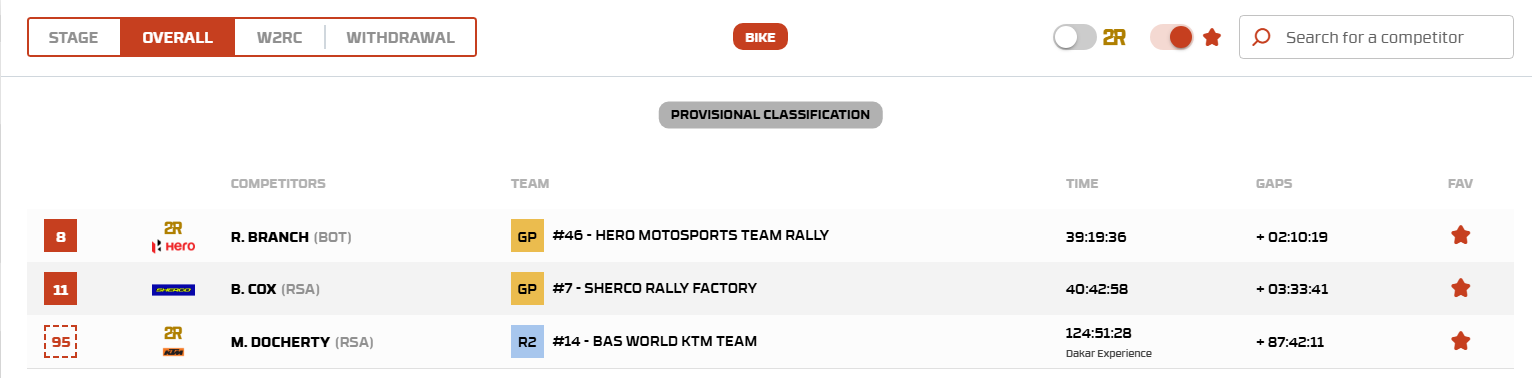
- 247 vehicles (out of 317 at the start) crossed the finish line in Yanbu, 204 of which were presented with finisher’s medals on the podium: 90 motorbikes (9 in RallyGP and 79 in Rally2), 133 cars (61 in Ultimate, 33 in Challenger, 32 in SSV and 7 in Stock) and 24 trucks.
- 91 vehicles appear in the final standings of the Dakar Classic regularity race, which went to the Lithuanian Karolis Raisys in his second participation.
- The third edition of the Dakar Future Mission 1000 pitted seven alternate-fuel vehicles against the landscapes of the Dakar. Jordi Juvanteny’s KH7-Ecovergy truck nabbed its third victory in this class, while Fran Gómez Pallas’s Arctic Leopard Galicia Team e-bike beat Benjamín Pascual’s Segway in the two-wheel class. They will be up for a rematch in 2027, when other promising contenders are due to step into the fray.
CARS: AL ATTIYAH, THE ART OF PERFECTION
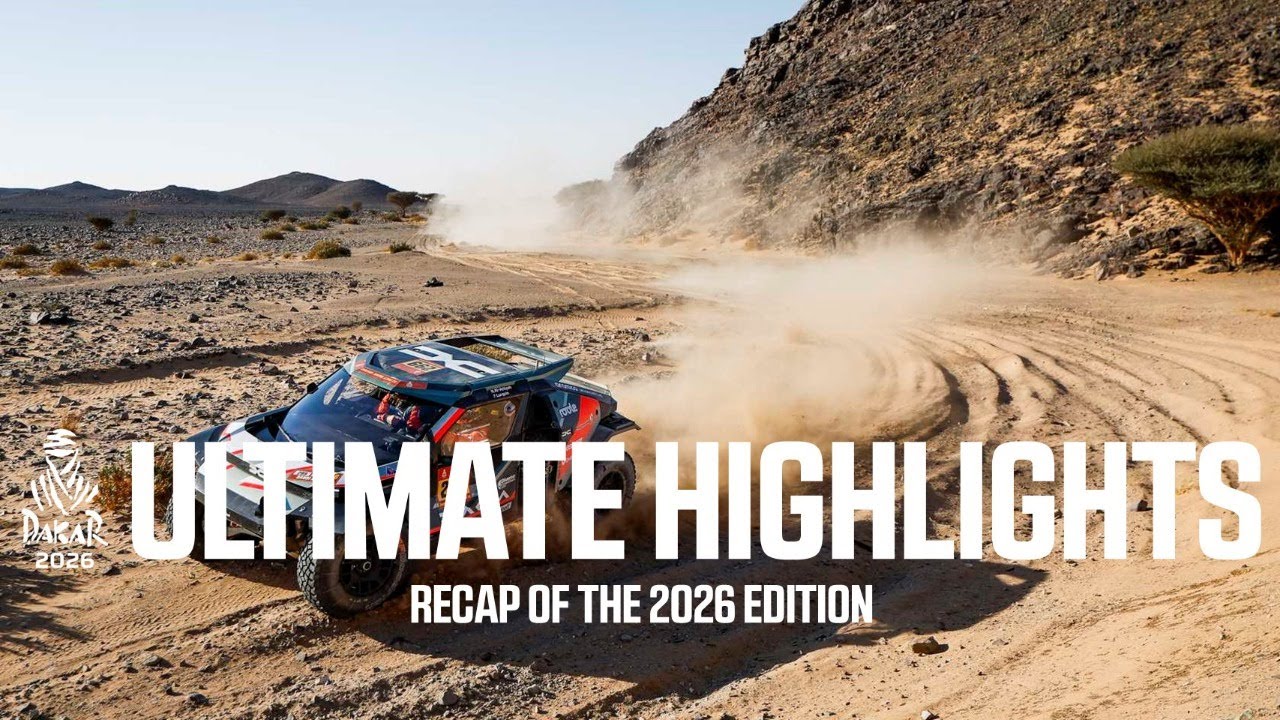
“The race has never been so wide open in the history of the Dakar”, declared the top drivers in unison, facing an unprecedented field of champions and machines in the 48th edition. The unanimity of this verdict adds even more weight to the 2026 title, which adds a sixth Bedouin trophy to Al Attiyah’s cabinet. This win carries all the more weight for having been secured through a master class in control from start to finish. It was a model of composure, a near-flawless strategy and a battle plan worthy of Alexander the Great built around two decisive days on which it was crucial to secure the ideal start position. Stage 6, a 300 km sea of dunes, is where the architect laid the first stone of his foundation. Al Attiyah began the return leg to Yanbu at the helm of an elite field that was indeed tighter than ever (the top 5 was squeezed into just 12 minutes at the rest day). Of course, he had to hold his own through the second marathon stage, but on the day following that delicate test he placed the capstone atop the monument. Second in the stage, behind Mathieu Serradori, Al Attiyah made the decisive break. To add the finishing touches, the maestro of the tracks charged towards Yanbu to claim the penultimate stage for glory and history. His record-equalling fiftieth special win places him alongside the giants Ari Vatanen and Stéphane Peterhansel. Michelangelo would have been proud!
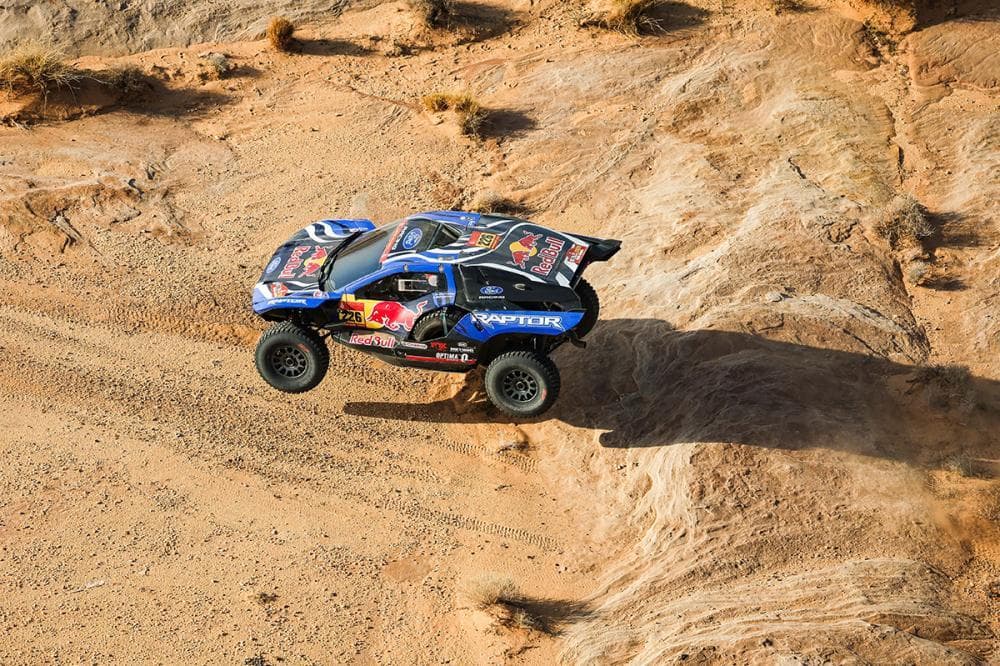
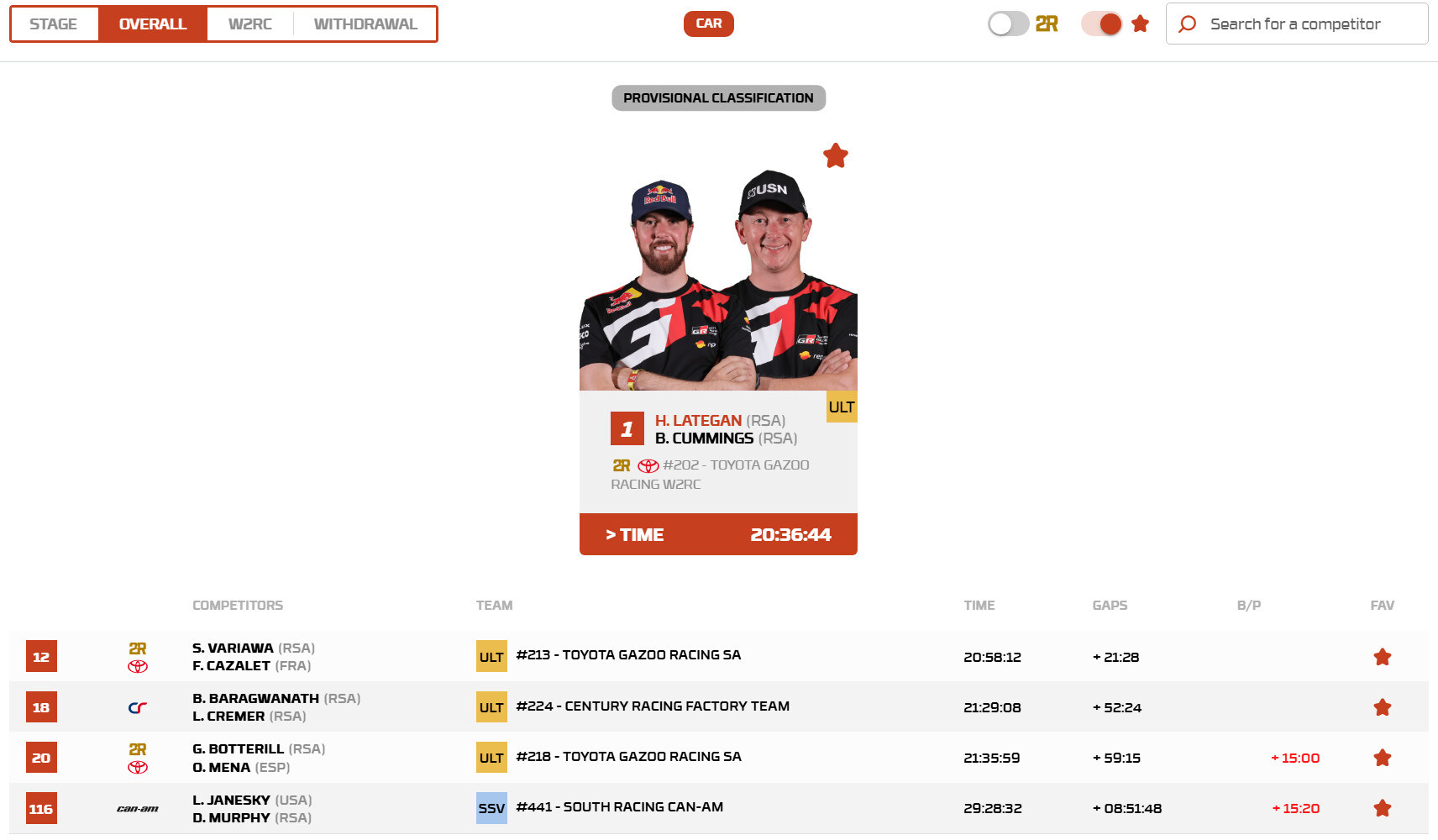
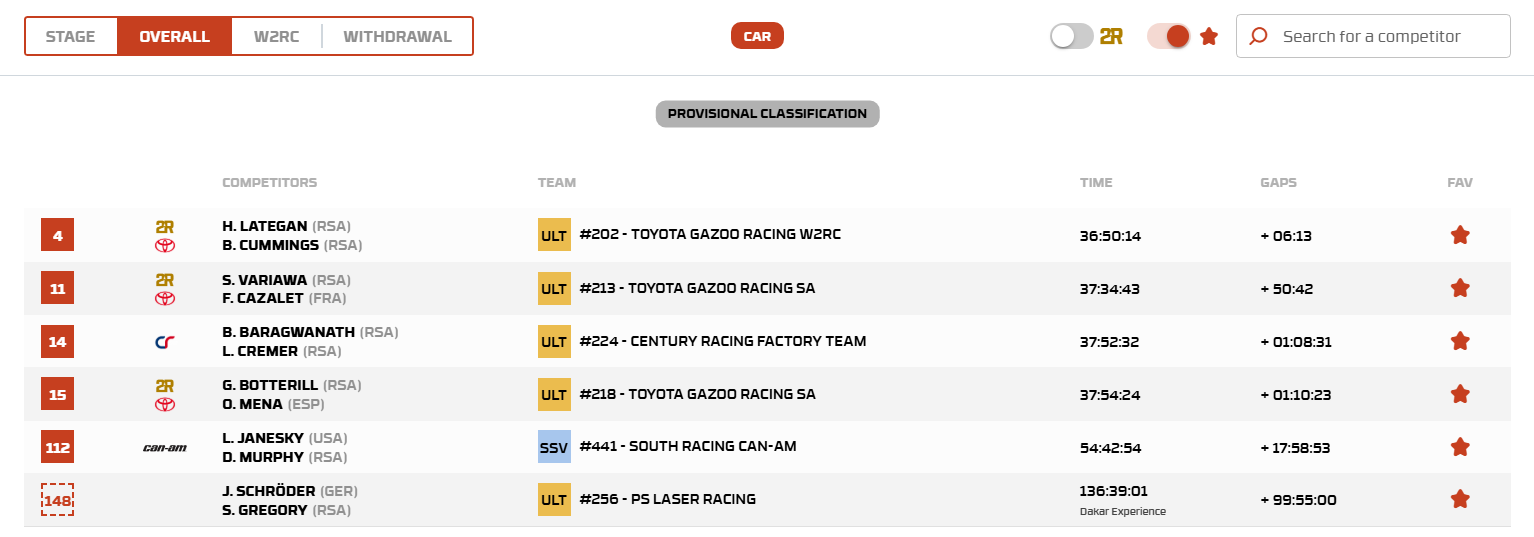
The podium spots behind Dacia Sandrider no. 299 also turned into a game of musical chairs in the final days. Henk Lategan, the runner-up to Al Rajhi in 2025, was the last chance to see a Toyota Hilux at the summit, but a mechanical sank him in stage 10. A rear wheel hub bearing gave way at the worst possible time, right as he was trying to erase his 12-minute deficit to Al Attiyah. Ever-present throughout the Dakar, with six specials won over fourteen days of racing, the Ford Raptors have always had at least one car in the top 3. On the eve of the finish, already in Yanbu, Nani Roma made a Herculean effort to salvage his second place in the nick of time after breaking his front end and receiving help from several crews to reach the bivouac on time. The battle for the third step of the podium went down to the wire, with Mattias Ekström determined to defend his position over the final 105 km against Sébastien Loeb, whom he led by only 29 seconds. The Swede did more than just retain the podium spot he earned in 2025. He finished his Dakar exactly as he had started it in the Yanbu prologue, with a victory. Meanwhile, the Frenchman finished the Dakar outside the top 3 for the first time, 37 seconds shy of the podium.
A little further back, but with gaps that have never been so narrow at the finish, the Toyotas had to settle for the final three spots in the top 10, with Toby Price eighth at 52 minutes, Seth Quintero ninth at 1 h 15 and Saood Variawa tenth at 1 h 23. Meanwhile, Mathieu Serradori once again claimed the sixth place he had taken last year, this time with a stage win to boot. Among his former two-wheel-drive companions, the battle of the MD Rallye Optimus buggies was won by Simon Vitse (fourteenth) ahead of Christian Lavieille (twentieth). This year, the Stock class saw the arrival of the manufacturer Defender, whose debut on the track ended in victory. The Lithuanian Rokas Baciuška proved fastest, reaching Yanbu nearly four hours ahead of his teammate Sara Price, while the Toyota Land Cruisers managed to hold their own, with Ronald Basso finishing third in the final standings. Stéphane Peterhansel completed his 36th Dakar in fourth place in the Stock class after struggling more than usual.
MOTORBIKES: A DATE WITH FATE FOR BENAVIDES
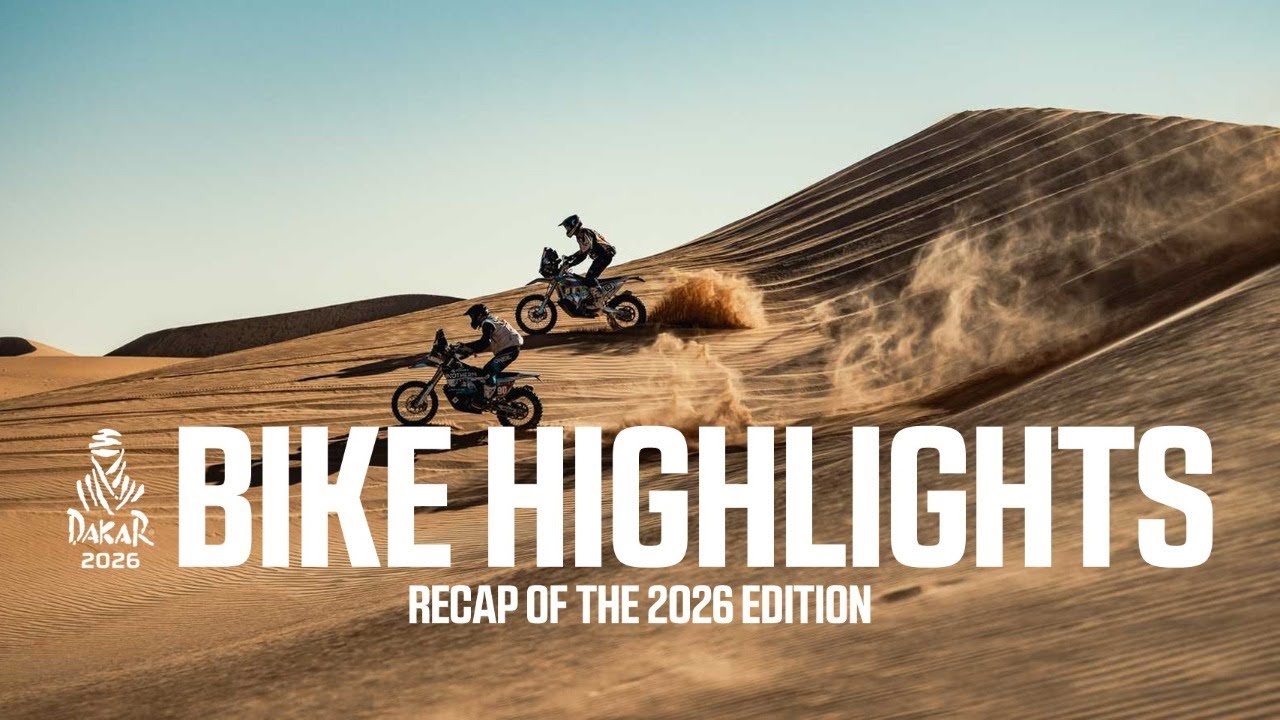
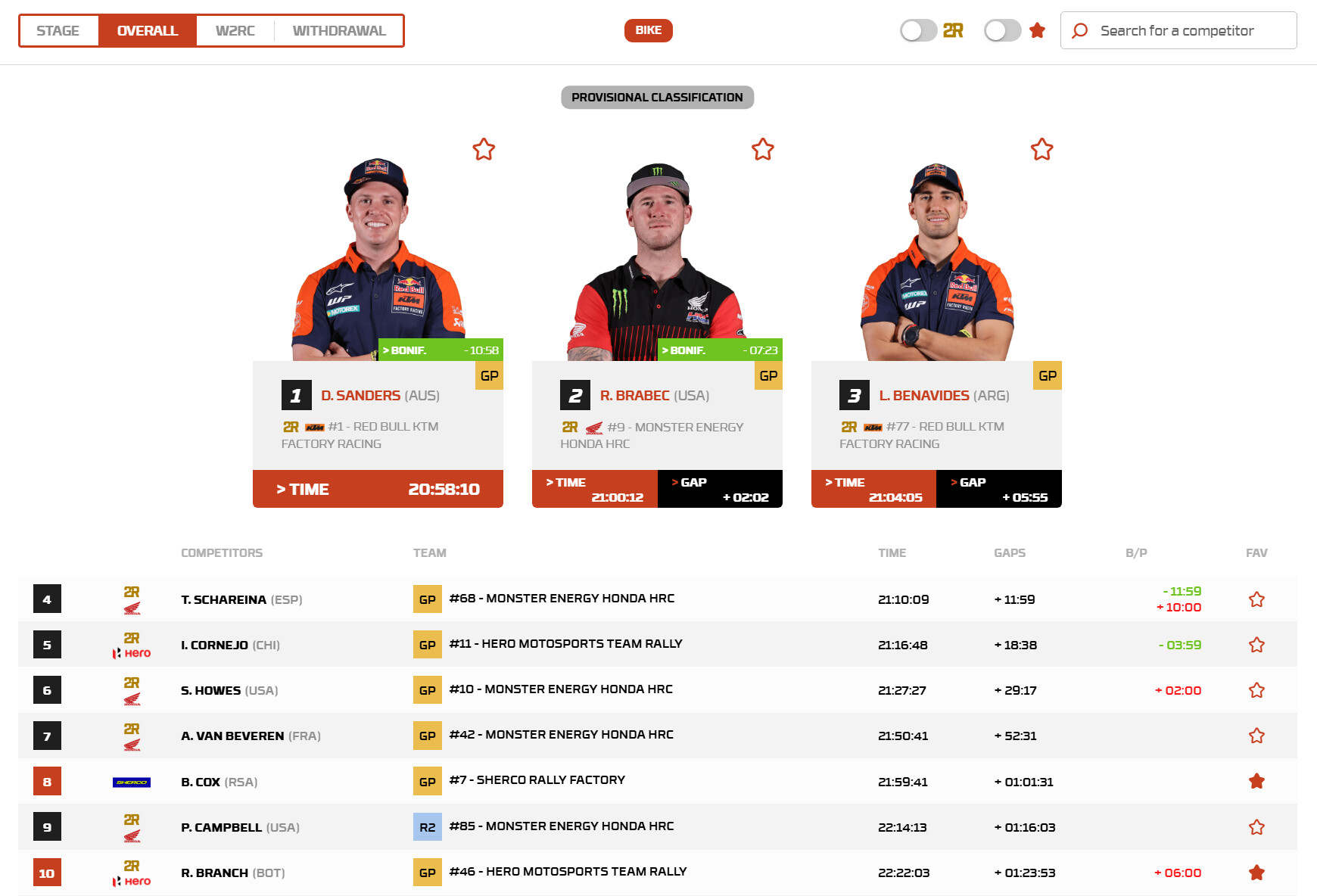
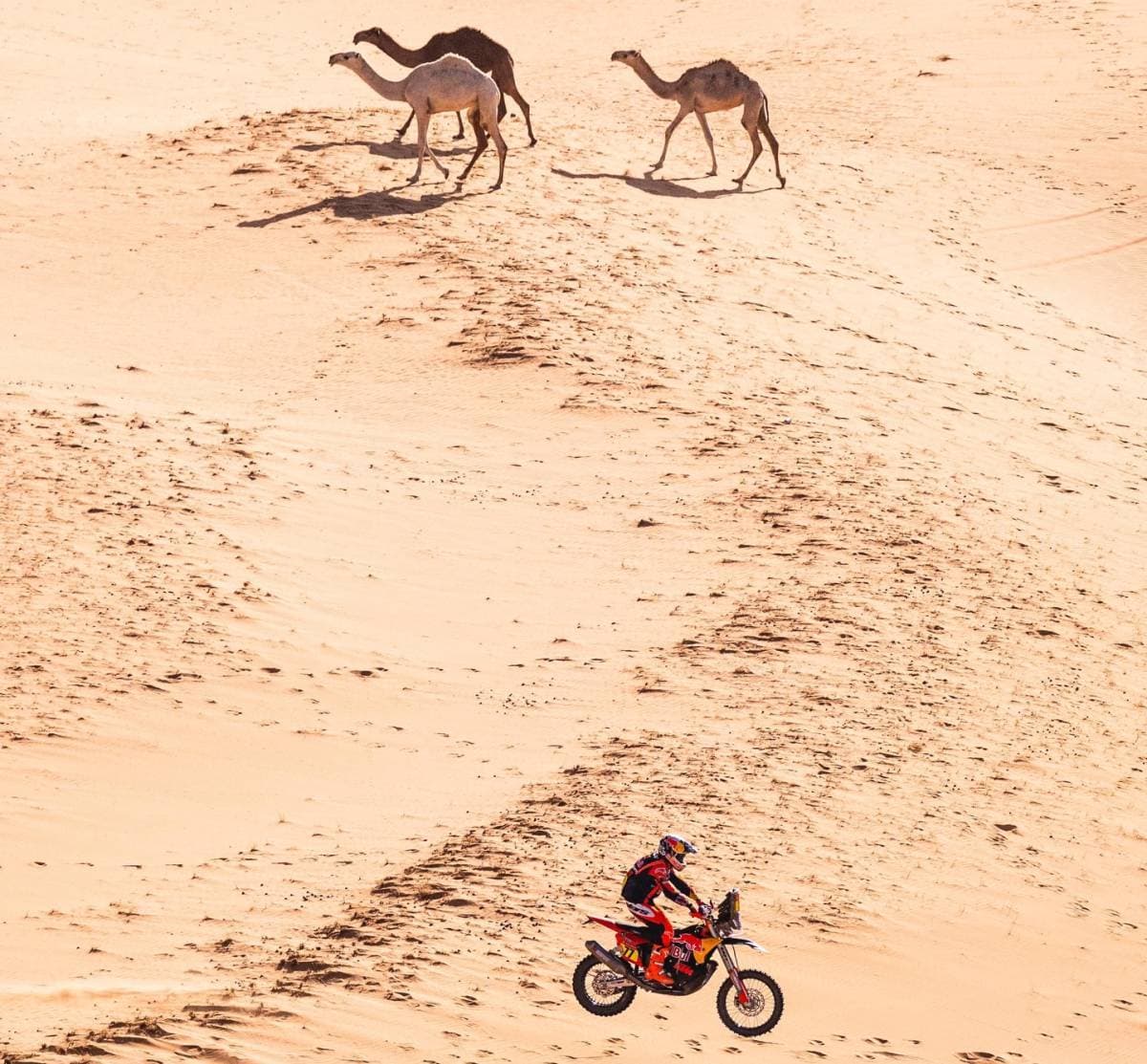
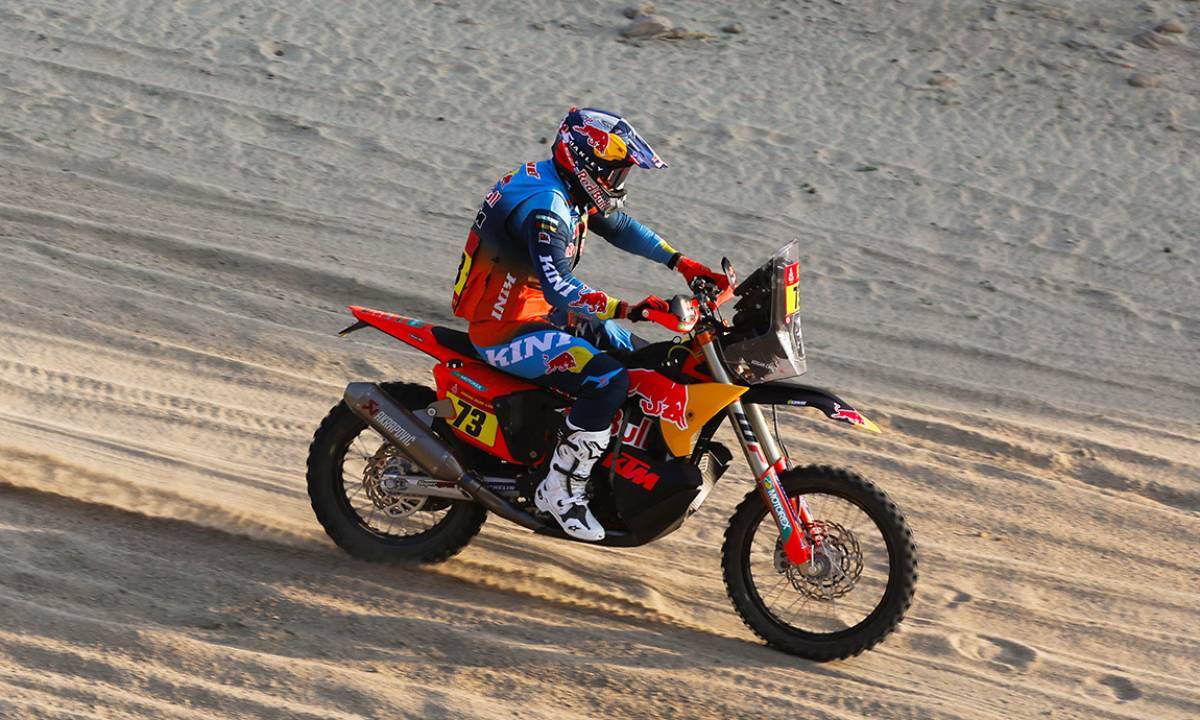
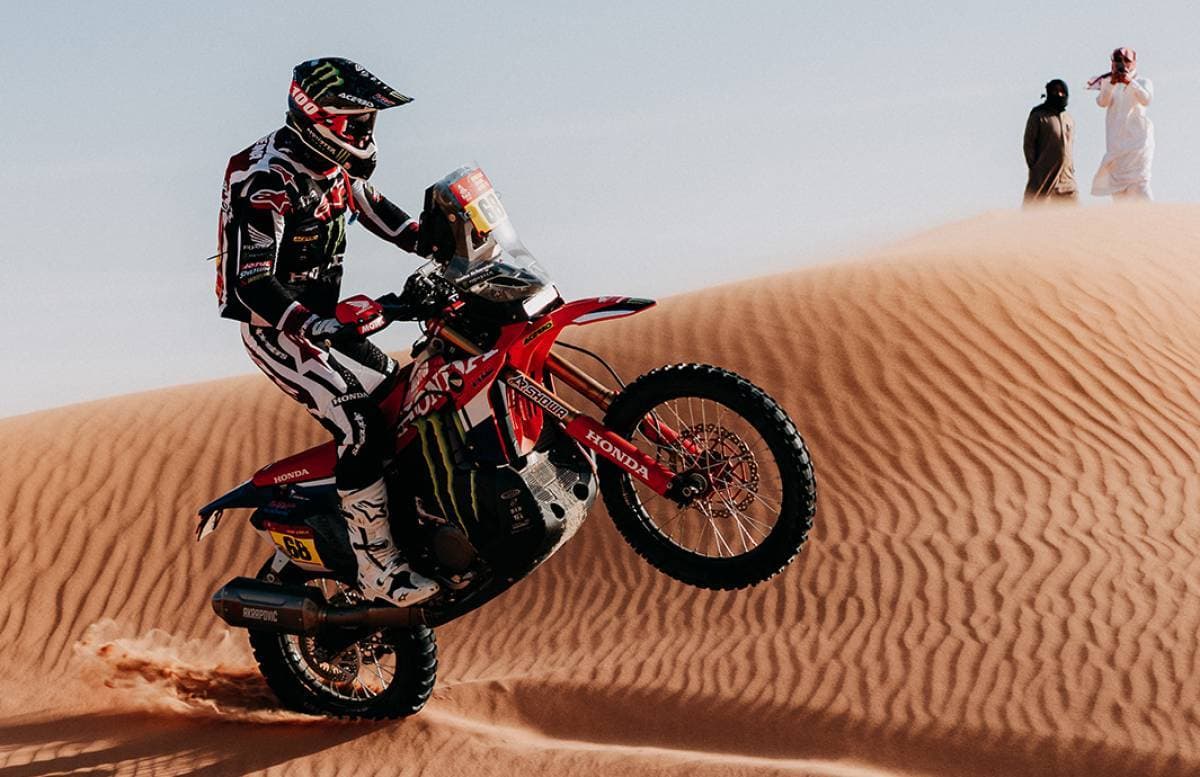
In the context of the 2026 Dakar, the days when Daniel Sanders seemed in a league of his own, with Tosha Schareina as his sole potential challenger, seem like a lifetime ago! The balance of power shifted when the Spaniard was slapped with a 10-minute penalty for ignoring flags while exiting the bivouac-refuge (stage 5), but Monster Energy Honda HRC found a rock-solid replacement leader in Ricky Brabec, who looked more than capable of taking the fight to the Australian. The duel was indeed shaping up to be a classic, right until the world champion smashed his shoulder on the road to Bisha, scuppering his hopes of back-to-back titles without forcing him to withdraw. Red Bull KTM Factory Racing camp refused to give up, however, as a new ace began to show its hand. A solid Luciano Benavides claimed the overall lead for the first time by taking his third special of the year in stage 8 (winning from the front), but “Chucky” was still very much in the hunt, just 10 seconds adrift.
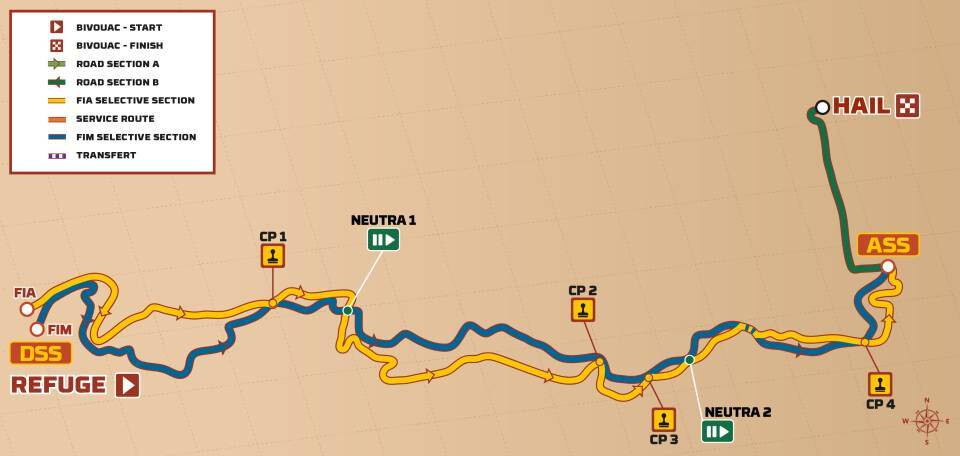
After Sanders crashed, the full weight of the KTM squad rested on the shoulders of the Argentinian, leaving him face to face with Brabec, a two-time winner (2020 and 2024) who was clearly still in top shape. Supplementing his precision riding, the American attempted a gamble, perhaps even a stroke of genius, by sandbagging at the end of stage 11. This left Benavides in the overall lead by a mere 23 seconds, but in the worst possible position for stage 12: a mathematical deathtrap paired with a psychological hammer blow for a leader on borrowed time, who looked a shadow of his usual self that evening. The script written by the American was playing out perfectly. Brabec started the final stage (usually considered a formality) with 3′20″ in hand. The deal was all but sealed… until km 98.4! Opening the way, the Honda rider had just 7 km of parade riding left, but a navigation error sent him slightly too far left, forcing him into a loop of about 3 km to get back on track. Meanwhile, Luciano Benavides charged across the finish line and saw Ricky Brabec clock in 2 seconds too late, the narrowest margin ever in the Dakar standings. Absolute madness! It was an even tighter finish than that of his two-time winner brother Kevin, who had also turned the tables on the final day in 2023, winning by 43 seconds over Toby Price.
KTM’s 21st Dakar victory heralded the rise of an orange tide in the Red Sea, as the Rally2 class also saw a dramatic turnaround at Honda’s expense. Preston Campbell, the son of the former rider Johnny Campbell (who happens to be Brabec’s mentor), had been perched at the summit right up until the finish of stage 11, where the slow but steady comeback of the Slovenian Toni Mulec finally paid off. The BAS World KTM satellite team’s rider, competing in his fourth Dakar, never looked back, finishing with 4′37″ to spare over his defeated rival. The 26-year-old American, tenth overall, got the top rookie title as a consolation prize.
Last but not least, Benjamin Melot, eighteenth overall, finally got his hands on the title in the Original by Motul class for riders without service crews, which had narrowly escaped him last year. This time round, he beat the Spaniard Josep Pedró by 14′32″.
 ):
):