 Good morning!
It is Tuesday, 30 March 2021
(W13/D89/276 rem)
Today is: 
 Pencil Day
Pencil Day honours the humble writing tool that has done more than just teach millions the alphabet and draw straight lines. It’s helped win wars, produced amazing art, and satisfied our subconscious need to chew on our writing implements for hundreds of years.
Celebrated since the mid-1970s, I couldn’t find a definitive answer as to exactly who started Pencil Day, but did discover why it happens today.
Hymen Lipman received the first patent for attaching an eraser to the end of a pencil on this day in 1858. Before that time, pencils and erasers existed separately. Lipman combined the two making the pencil significantly more convenient to use. The intuitive businessman also manufactured envelopes for his stationery shop and was the first to add adhesive to the flap of envelopes.
The pencil is one of the earliest writing tools, its modern version thought to have originated in Europe in the 16th century when a large graphite deposit was discovered in England. Early, crude examples consisted of nothing more than a graphite stick wrapped in string; later a hollowed wooden stick served as the forerunner to the wood-cased pencil.
Germany birthed the first mass-produced pencils, with Faber-Castell, Lyra and Steadtler, as well as a few other companies, leading the way. Across the pond, the Joseph Dixon Crucible Company of Massachusetts, which later became the Dixon Ticonderoga Company, and others jumped on the bandwagon in the late 19th century, and some German manufacturers even set up shop in the US. By 1872, it is estimated that the Dixon company was making about 86,000 pencils a day.
Today, Faber-Castell is one of the few companies that still places emphasis on its luxury wood-cased pencils, in addition to its lovely array of pens, limited editions and more. It is estimated that the company now makes over a couple of billion pencils in a variety of colors per year, including its art and premium pencils.
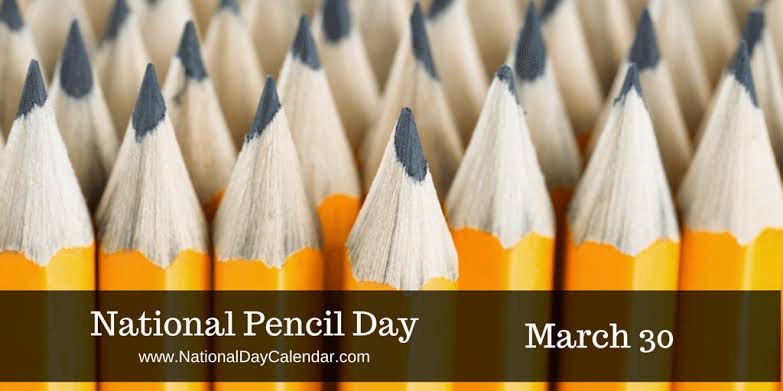
In the United States, most pencils are painted yellow. It is believed this tradition began in 1890 when the L&C Hardtmuth Company of Austria-Hungary introduced their Koh-I-Noor brand, named after the famous diamond. They intended the pencil to be the world’s best and most expensive pencil. However, other companies began to copy the yellow color so that their pencils would also be associated with the high-quality brand.
This may come as a shock to some people but lead pencils do not contain any lead. The “lead pencil” as we know never has. The “lead” actually is a mixture of graphite and clay; the more graphite, the softer and darker the point. The common name “pencil lead” is due to an historic association with the stylus made of lead in ancient Roman times.

Notable pencil pushers:
- Thomas Edison had pencils specially made by Eagle Pencil. His pencils were three inches long, thicker than standard pencils, and had softer graphite than typically available.
- Vladimir Nabokov rewrote everything he ever published, usually several times, by pencil.
- John Steinbeck was an obsessive pencil user and is said to have used as many as 60 a day. His novel East of Eden took more than 300 pencils to write.
- Vincent van Gogh used only Faber pencils as they were “superior to Carpenters pencils, a capital black and most agreeable.”
- Johnny Carson regularly played with pencils at his Tonight Show desk. These pencils were specially made with erasers at both ends to avoid on-set accidents.
- Roald Dahl used only pencils with yellow casings to write his books. He began each day with six sharpened pencils and only when all six became unusable did he resharpen them.
Finally, a quick primer on grading your pencil graphite (not lead!), from the people who know everything there is to know about pencils: Pencils.com
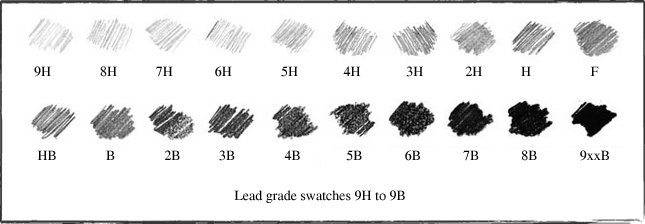
So what’s your pencil of choice? Do you like it blacker, or harder? <—That’s what she said, prime Out of Context content 
Have a lekker, lead-free Tuesday! 