 Good morning!
It is Tuesday, 27 April 2021
(W17 | D117 | 248 rem)
Today is:  Morse Code Day
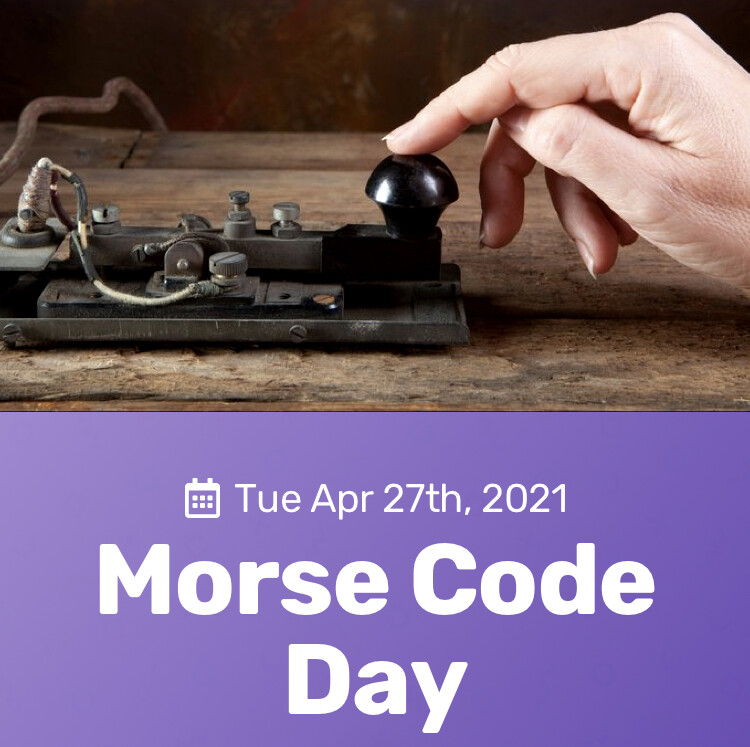
.... .- .--. .--. -.-- / -- --- .-. ... . / -.-. --- -.. . / -.. .- -.--
We’ve heard the sound in movies both old and new, it finds its way into horror movies as some lost mysterious code. Heroes in action flicks use it to help send out secret messages past the villains holding them captive, and secret lovers have passed messages using it in carefully constructed pieces of art or even braille. It served as the foundation for a new era of communication, and has served vital roles in wars old and new. What is it we’re talking about? Morse Code of course!
27 April is the birthday of Samuel Morse, who was also a respected portrait artist, as well as an inventor.
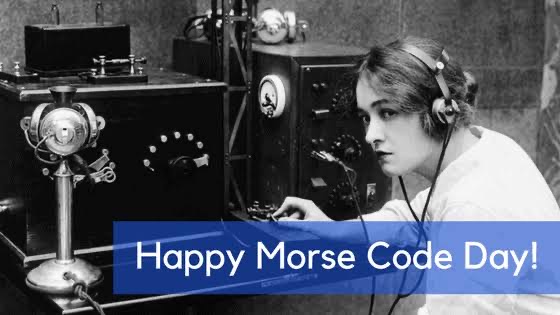
Morse Code Day celebrates this amazingly concise, powerful, and influential way of transmitting information and the history of how it changed the world.
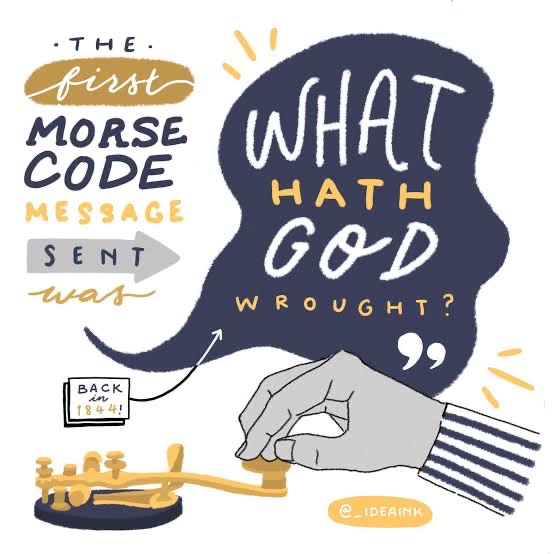
In 1838, Samuel Morse and his assistant Alfred Vail developed a system of dots and dashes that corresponded to numbers, letters, and punctuation, that became known as Morse Code.
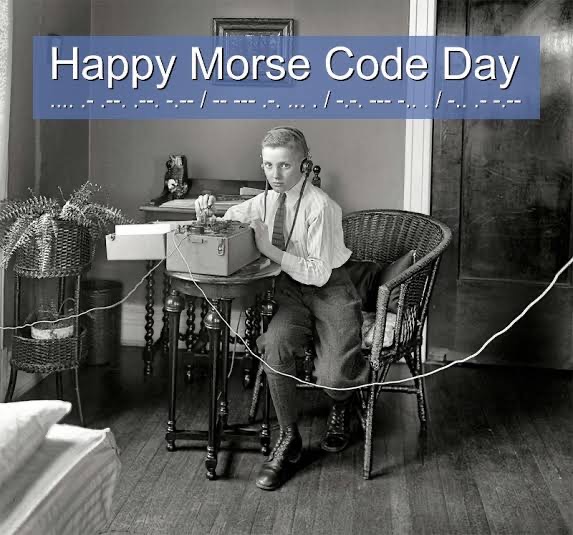
It was used to transmit messages using electrical signals, which originally traveled by wire, before being recorded by a receiving device on the other end that embossed the code on a strip of paper which could then be read. Although the use of Morse Code became less common after the advent of the telephone, it was an important innovation that enabled long-distance communication to become more widespread.
We’ve tried posting Morse code translations here before, sometimes not entirely successfully. The forum does odd things to sequences of dots and dashes for some reason. If you do want to give it a try, use any one of the many online Morse Code Translators (here’s the one I used) to convert your comment to Morse and then paste it in here, and let’s see if it works a little better now.
Have a well coded Tuesday! #-.. --- -. - -... . -.- .- -.- 
Today is also Freedom Day  in South Africa.
Freedom Day on 27 April is an annual celebration of South Africa’s first non-racial democratic elections of 1994. It is significant because it marks the end of over three hundred years of colonialism, segregation and white minority rule and the establishment of a new democratic government.
The 1994 election paved the way towards a new democratic dispensation and a new constitution for the country. The elections took place in a peaceful and festive atmosphere, though there were threats of political violence.
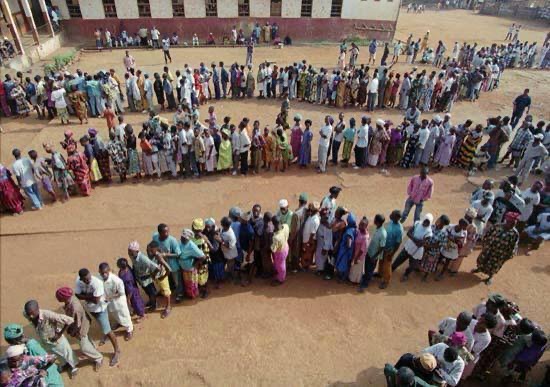
Of South Africa’s 22, 7 million eligible voters, 19.7 million voted in the 1994 national election. The election was won by the ANC with 62.65 % of the vote.
Although the ANC gained a majority vote, they formed the Government of National Unity, headed by the president of the ANC’s Nelson Mandela who became the first democratically elected President of the country.
As dawn ushered in this day, the 27th of April 1994, few of us could suppress the welling of emotion, as we were reminded of the terrible past from which we come as a nation; the great possibilities that we now have; and the bright future that beckons us. And so we assemble here today, and in other parts of the country, to mark a historic day in the life of our nation. Wherever South Africans are across the globe, our hearts beat as one, as we renew our common loyalty to our country and our commitment to its future.
Nelson Mandela, 27 April 1995, Parliament of South Africa